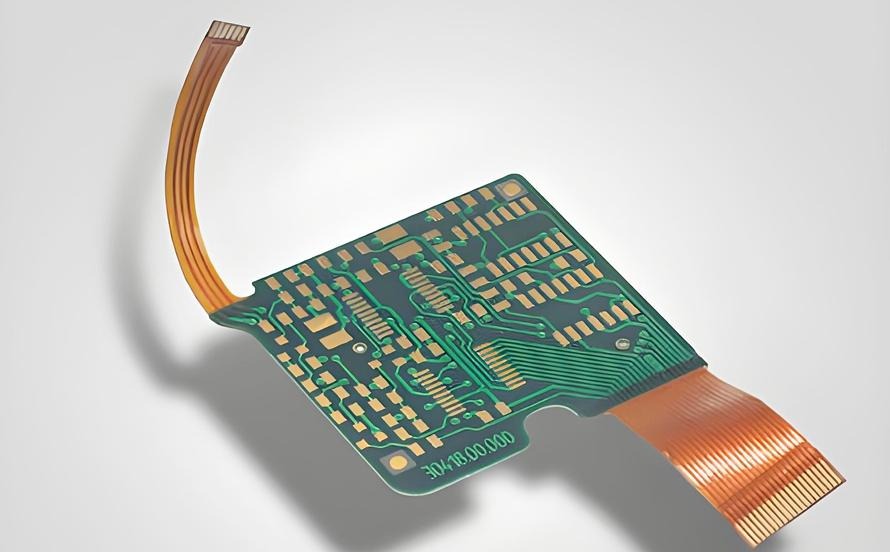
Modern electronic products increasingly require circuit boards that can fit into smaller spaces while maintaining reliable electrical and mechanical performance. Traditional rigid PCBs provide structural stability, while flexible circuits offer the ability to bend and fold. Rigid-flex technology combines these characteristics into a single circuit board, creating new possibilities for compact and complex electronic designs.
Rigid flex PCB assembly involves mounting electronic components onto boards that contain both rigid and flexible sections. Because these assemblies combine different PCB structures, the manufacturing process requires careful attention to component placement, soldering, flex areas, and mechanical requirements. Proper assembly methods can help manufacturers produce dependable electronic assemblies for applications where space and flexibility are important.
What Is Rigid Flex PCB Assembly?
Rigid-flex PCB assembly is the process of assembling electronic components onto a circuit board that integrates rigid PCB sections with flexible circuit layers. The rigid portions provide support for components, while the flexible sections allow the board to bend or move according to the product’s mechanical design.
Unlike conventional PCB assemblies, rigid-flex boards can be designed to replace multiple interconnected rigid boards and cables. This can reduce the number of connectors and wiring connections required within an electronic device.
The combination of rigid and flexible sections makes this technology useful for products with limited internal space, moving parts, or unusual mechanical configurations.
How Rigid-Flex Technology Works
A rigid-flex circuit typically consists of rigid board sections connected through flexible circuit areas. Components are generally mounted on the rigid sections, while the flexible portions are designed to accommodate controlled bending.
The materials used in the flexible sections must be capable of withstanding the required bending and manufacturing conditions. Polyimide is commonly used as a flexible substrate because of its flexibility and thermal characteristics.
The rigid sections may use conventional PCB materials such as FR-4. The combination creates a single integrated structure capable of providing both mechanical support and flexibility.
Benefits of Rigid-Flex PCB Assembly
One of the primary advantages of rigid-flex assemblies is their ability to save space. Since flexible sections can bend around other components or fit into irregular spaces, designers have greater freedom when developing compact products.
Other potential benefits include:
- Reduced connector requirements
- Lower wiring complexity
- Better use of internal product space
- Improved mechanical integration
- Reduced overall assembly size
- Fewer interconnection points
- Support for compact electronic devices
- Improved reliability in certain applications
Reducing the number of separate cables and connectors can also simplify the internal structure of an electronic product.
Key Stages in Rigid-Flex PCB Assembly
The assembly process requires careful planning because the board contains both rigid and flexible areas.
- Solder Paste Application
For surface-mount components, solder paste is applied to the designated pads using a stencil. The stencil must be properly aligned to ensure that the correct amount of solder paste reaches each pad.
Rigid-flex boards may have more complicated geometries than conventional rigid PCBs, making fixture design and board handling important considerations during production.
- Component Placement
Automated pick-and-place machines are commonly used to position components on rigid sections of the board. Components may include resistors, capacitors, integrated circuits, connectors, sensors, and other devices.
Accurate component placement is essential because dense layouts may leave limited space between components.
- Reflow Soldering
After placement, the assembly passes through a controlled reflow soldering process. The solder paste melts and forms connections between components and PCB pads.
Thermal profiles need to be carefully controlled because flexible materials and rigid materials can respond differently to heat. Proper process development helps protect the flexible portions while achieving reliable solder joints.
- Inspection and Testing
Inspection helps identify problems such as missing components, incorrect placement, solder bridges, and soldering defects. Automated Optical Inspection can be used for visible features, while other inspection techniques may be required for hidden solder connections.
Electrical testing can also help verify circuit continuity and confirm that the assembled board performs according to its design.
Design Considerations for Rigid-Flex Assemblies
Successful rigid-flex manufacturing begins with a suitable PCB design. The flexible regions need to be designed according to the required bending conditions and mechanical movement.
Designers should consider bend radius, copper routing, layer configuration, component placement, and mechanical stress. Components should generally be kept away from areas that will experience repeated bending unless the design specifically supports such placement.
The transition between rigid and flexible sections also requires careful consideration. Improper mechanical design can create stress concentrations that may affect long-term reliability.
Materials Used in Rigid-Flex Circuit Boards
Material selection has a significant impact on the performance of a rigid-flex circuit. Flexible sections commonly use polyimide-based materials, while rigid sections can incorporate materials such as FR-4.
Other material characteristics may also need to be considered, including dielectric properties, thermal stability, copper thickness, adhesive systems, and overall layer construction.
The appropriate material combination depends on the product’s operating environment and electrical requirements.
Quality Control in Rigid-Flex Manufacturing
Quality control is particularly important because rigid-flex boards combine electrical and mechanical requirements. Manufacturing teams need to verify not only solder quality but also the physical integrity of the flexible sections.
Inspection may include visual examination, automated optical inspection, dimensional checks, electrical testing, and functional testing. For complex assemblies, additional testing may be performed according to product specifications.
Maintaining production records and traceability can also help manufacturers identify issues and maintain consistency across different production batches.
Applications of Rigid-Flex PCB Assemblies
Rigid-flex circuit boards are used in applications where conventional rigid PCBs and separate cables may create space or reliability challenges.
Common applications include:
- Medical electronics
- Automotive systems
- Aerospace equipment
- Wearable devices
- Consumer electronics
- Cameras
- Industrial equipment
- Portable electronics
- Robotics
- Communication equipment
The technology is especially useful where electronic components need to connect across moving or constrained areas inside a product.
Choosing a Rigid-Flex PCB Assembly Partner
Choosing an appropriate manufacturing partner involves evaluating experience with both rigid and flexible PCB technologies. The manufacturer should have suitable assembly equipment, inspection capabilities, material knowledge, and experience handling flexible circuit sections.
It is also important to consider engineering support. A manufacturer familiar with rigid-flex production can identify potential issues related to component placement, thermal processing, board handling, bending areas, and manufacturability.
Production capacity and testing capabilities should also match the requirements of the project, whether it involves prototypes, low-volume production, or larger manufacturing runs.
Conclusion
Rigid-flex technology provides an effective way to combine the structural advantages of rigid circuit boards with the flexibility of flexible circuits. By integrating these technologies into a single PCB, designers can reduce wiring complexity, save space, and create electronic products with more efficient internal layouts.
As electronic devices continue to become smaller and more mechanically sophisticated, an experienced rigid flex PCB assembly Solution provider can support component placement, soldering, inspection, testing, and other manufacturing requirements while helping produce reliable assemblies for demanding electronic applications.