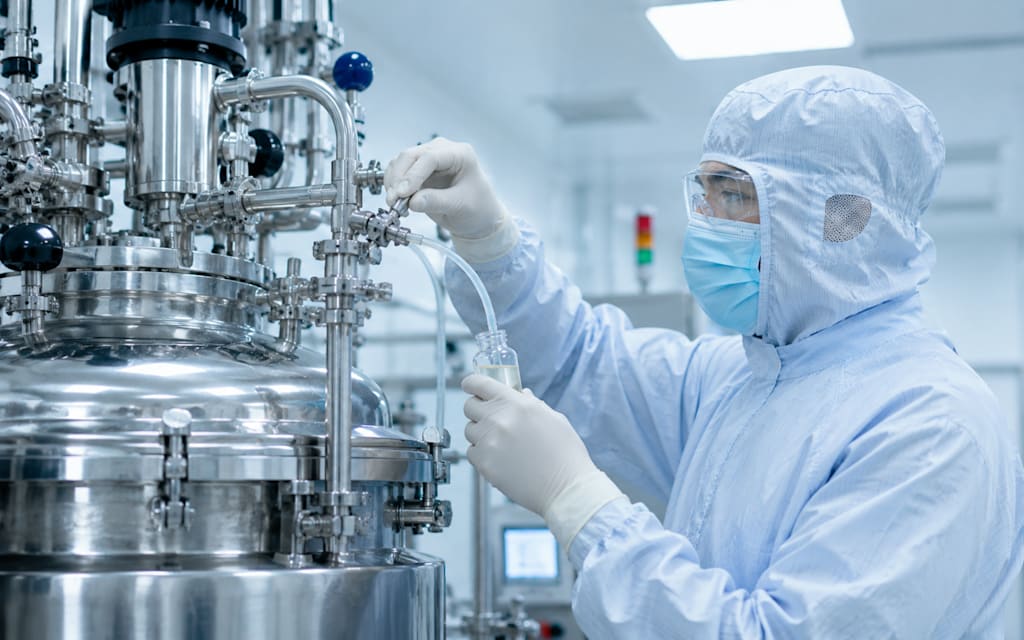
Advanced Research and Product Development
Modern laboratory manufacturing begins with extensive research and development, which forms the foundation of every successful product. Scientists, engineers, and technical specialists work together to understand material properties, chemical reactions, biological interactions, and production requirements before manufacturing starts. Through detailed experimentation and analysis, laboratories can identify the most effective methods for creating products that meet strict quality and safety standards. This scientific approach reduces uncertainty and helps manufacturers develop reliable products for industries such as pharmaceuticals, biotechnology, electronics, food processing, and chemical production.
Research laboratories utilize advanced instruments and analytical technologies to collect precise data during the development phase. Equipment such as spectrometers, chromatographs, microscopes, and automated testing systems allow researchers to examine substances at molecular and microscopic levels. These technologies provide valuable insights into product behavior, enabling manufacturers to optimize formulas, improve performance, and eliminate potential defects before large-scale production begins. By relying on scientific evidence rather than assumptions, modern laboratory manufacturing creates products with greater consistency, efficiency, and reliability.
Precision Through Automation and Digital Technology
One of the most significant scientific advancements in Metabolic labs manufacturing is the integration of automation and digital technology. Automated systems perform repetitive tasks with exceptional accuracy, reducing the likelihood of human error while increasing productivity. Robotic equipment can handle sample preparation, material dispensing, mixing, testing, and packaging processes with remarkable precision. This level of automation ensures that every stage of production follows predetermined specifications, resulting in uniform product quality.
Digital monitoring systems further enhance manufacturing performance by collecting and analyzing real-time data. Sensors continuously track variables such as temperature, pressure, humidity, pH levels, and flow rates throughout the production process. Advanced software platforms process this information instantly, allowing operators to identify deviations and make immediate adjustments when necessary. Artificial intelligence and machine learning technologies are also becoming increasingly important, helping laboratories predict equipment maintenance needs, optimize production schedules, and improve process efficiency. Through the combination of automation and digital intelligence, laboratory manufacturing achieves unprecedented levels of accuracy and operational control.
Quality Control and Scientific Validation
Quality control is a critical scientific component of modern laboratory manufacturing processes. Every product must undergo rigorous testing to verify that it meets established performance, safety, and regulatory requirements. Scientists use validated testing methods to evaluate physical, chemical, and biological characteristics throughout various stages of production. These tests help ensure that products consistently meet customer expectations and comply with industry standards.
Scientific validation involves documenting and verifying that manufacturing processes perform reliably under defined conditions. Validation studies assess equipment functionality, process consistency, cleaning procedures, and analytical methods. Statistical analysis plays a vital role in this process, enabling laboratories to identify trends, measure variability, and establish acceptable performance limits. Comprehensive documentation supports traceability and accountability while providing evidence that products have been manufactured according to strict scientific standards. Through continuous monitoring and validation, laboratory manufacturers maintain high levels of product quality and minimize risks associated with production failures.
Material Science and Process Optimization
Material science serves as a cornerstone of modern laboratory manufacturing by helping scientists understand how different substances behave under various conditions. Whether working with pharmaceuticals, polymers, metals, chemicals, or biological materials, manufacturers must possess detailed knowledge of material properties to achieve optimal production outcomes. Factors such as stability, compatibility, solubility, viscosity, and thermal resistance influence the selection of raw materials and processing methods.
Process optimization uses scientific principles to improve manufacturing efficiency while maintaining product integrity. Researchers conduct controlled experiments to determine the ideal combination of variables that produce the best results. Techniques such as Design of Experiments (DOE), statistical process control, and computational modeling enable laboratories to identify optimal operating conditions with greater precision. By reducing waste, improving yields, and minimizing resource consumption, optimized processes contribute to both economic and environmental sustainability. Continuous improvement initiatives ensure that manufacturing operations evolve alongside technological advancements and changing market demands.
Future Innovations Shaping Laboratory Manufacturing
The future of laboratory manufacturing is being shaped by emerging scientific innovations that promise even greater levels of efficiency, precision, and sustainability. Advanced biotechnology techniques are enabling the development of highly specialized products, including personalized medicines, engineered biological materials, and next-generation therapeutic solutions. These innovations require sophisticated laboratory manufacturing systems capable of handling complex biological processes while maintaining strict quality standards.
Another transformative trend is the adoption of smart manufacturing environments that combine artificial intelligence, cloud computing, and interconnected devices. These technologies create highly responsive production systems that can adapt to changing conditions in real time. Digital twins, which are virtual representations of physical manufacturing processes, allow scientists to simulate production scenarios and optimize performance before implementing changes in actual facilities. Sustainable manufacturing practices are also gaining importance, with laboratories focusing on energy efficiency, waste reduction, and environmentally responsible production methods. As scientific knowledge continues to expand, laboratory manufacturing processes will become increasingly intelligent, flexible, and capable of producing innovative solutions that address global challenges. The combination of advanced research, automation, quality assurance, material science, and emerging technologies ensures that modern laboratory manufacturing remains at the forefront of scientific and industrial progress, driving innovation across numerous sectors and contributing to improved health, safety, and quality of life worldwide.